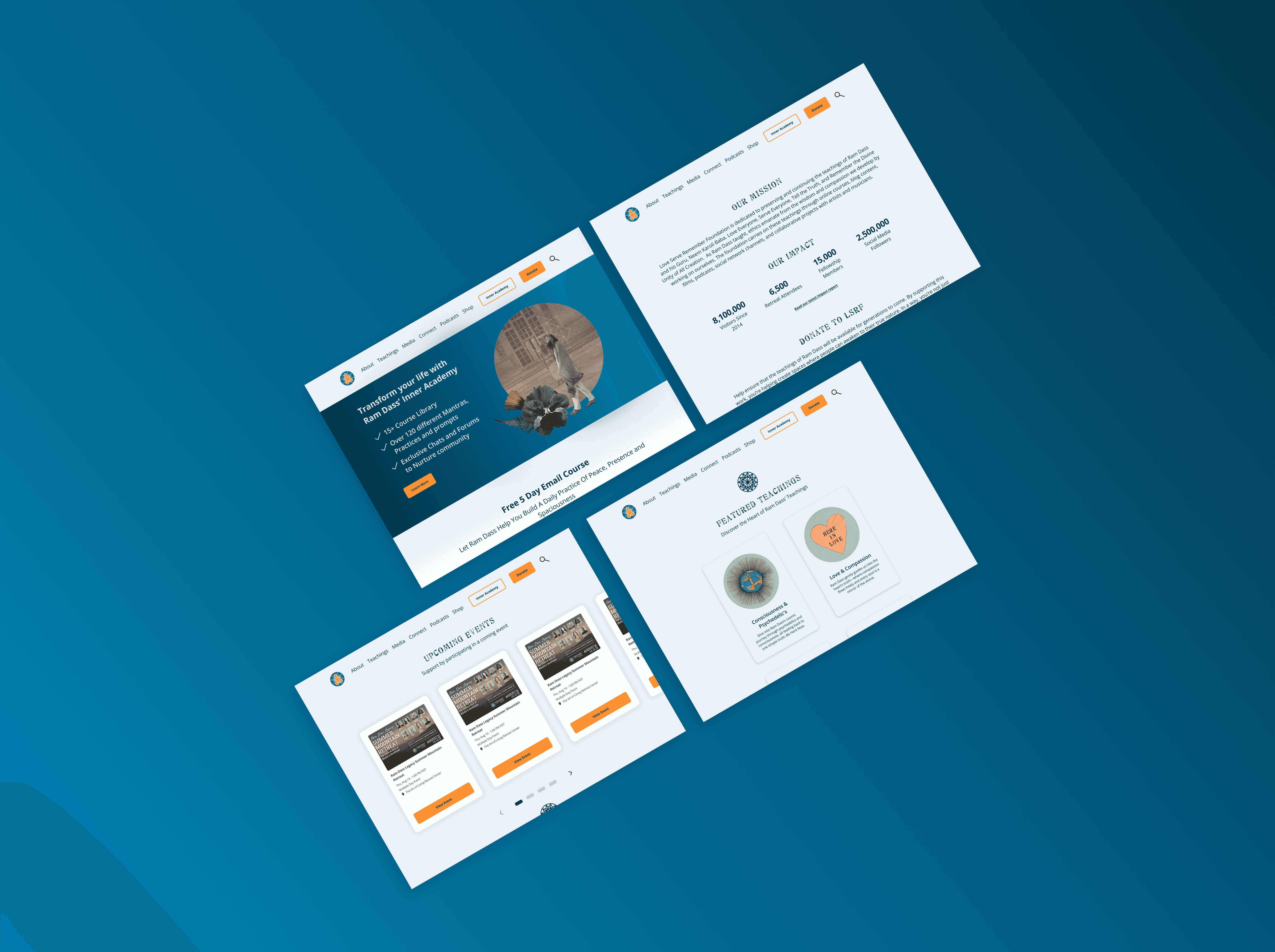
The previous site had grown organically over time. Navigation was confusing, the content hierarchy was unclear, and engagement on key calls-to-action was low.
The audience includes a large, engaged community that interacts with the foundation through retreats, lectures, online teachings, and donations. Ranging from new seekers to long-time students and event attendees.
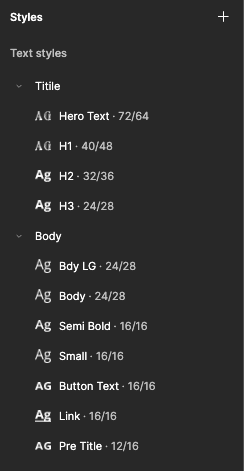
There were also practical constraints: the team needed to stay on WordPress and Elementor, which set clear boundaries on what was technically possible. The Ram Dass brand is also already established, so I worked within existing imagery and language while drawing more directly from Ram Dass visual materials (such as typography) to deepen consistency.
Research Insights
Stakeholders wanted to bring more attention to the Inner Academy, which was a key strategic priority but was not receiving many clicks from the homepage. Conversations with the Creative Director and Tech Lead revealed that the site had mostly been added onto over the years rather than rethought, resulting in a cluttered experience.
Through informal user tests and heuristic reviews, I observed that new visitors struggled to understand what the foundation offered and where to find specific content or actions; navigating to specific pages often felt awkward and indirect.
I ran card-sorting exercises with both stakeholders and a small sample of users to understand how they naturally grouped pages. Common themes emerged: key actions were buried, homepage modules competed for attention, and the navigation did not match how people's mental models.
These findings led to three design priorities:
Clarify the story of who Love Serve Remember is and what you can do on the site.
Elevate key actions (Inner Academy, events, podcast, donate) so they are easy to find on both desktop and mobile.
Simplify navigation and page structure to reduce cognitive load and create a calmer, more focused experience.
Design Solutions



Solution & Key Decisions
Makes it easier to maintain consistency across large organizations with multiple teams. Without it, different teams might solve the same design problem in slightly different ways, leading to a fragmented experience
Outcomes & Impact
Reflection
Designing for a spiritual nonprofit reinforced the importance of balancing clarity, communication, and organizational realities. In a small team, things naturally moved more slowly, people wear multiple hats, which meant I often had to step between product, UX, and visual design while staying aligned with leadership.
Collaborating closely with the Creative Director and Developer helped ensure the homepage direction stayed true to the Ram Dass brand and the foundation’s values.
With more time and resources, I would explore A/B testing different hero and CTA arrangements, running more structured user tests on key flows, and expanding the new patterns into additional pages beyond the homepage.